


If you work with harsh acids, strong alkalis, or any aggressive chemical powder, you already know the headache of finding a grinding jar that won’t fall apart or ruin your sample. Stainless steel rusts or leaches metal ions. Ordinary ceramic jars might crack under chemical attack. So what actually works? Based on my experience, silicon nitride milling jars are the quiet champion here.
Let me explain why. Silicon nitride (Si₃N₄) is not just hard – it’s chemically very lazy, and I mean that in a good way. It does not react with most acids, including hydrochloric, sulfuric, or nitric acid. It also stands up to hot caustic solutions like sodium hydroxide. That’s a big deal because in chemical processing you often need to grind things like catalyst powders, aggressive salts, or even corrosive intermediate compounds. A regular jar might start pitting or flaking after a few runs, but a silicon nitride jar just keeps going. The surface stays smooth, and no unwanted elements sneak into your material.
In our tests (and many real-world production lines), these jars have been used for weeks in direct contact with slurries that would eat through an aluminum oxide jar in days. The secret is the dense, non-porous surface. There is no place for chemicals to grab onto. And because silicon nitride is also incredibly wear-resistant, you don’t get tiny abrasive particles breaking off and contaminating your product. That means higher purity, less downtime, and no nasty surprises when you analyze your final powder.
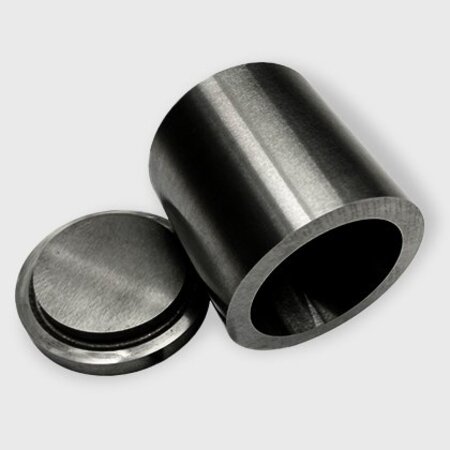
One more thing people often miss: temperature. Many corrosive processes involve heat – either from the milling action itself or from the chemicals you’re mixing. Silicon nitride handles that beautifully. It can take up to around 1150°C in air without losing its chemical resistance. So if you need to grind a hot, corrosive paste, you are covered.
Now, to give you a clear picture of how silicon nitride compares to other common jar materials, take a look at this quick table. It focuses on properties that matter most for corrosion resistance and chemical use.
| Material | Chemical Resistance (Acids/Alkalis) | Hardness (Mohs) | Max Service Temp (°C) | Risk of Metal Contamination |
|---|---|---|---|---|
| Silicon Nitride | Excellent (resists most strong acids & alkalis) | 9 – 9.5 | ~1150 | Virtually none |
| Stainless Steel | Poor to moderate (pits in chlorides, acids) | 5 – 6 | ~300 (varies by grade) | High (Fe, Cr, Ni leach) |
| Alumina (Al₂O₃) | Good for mild acids, weak in strong alkalis | 9 | ~1500 | Low (but possible Al contamination) |
| Zirconia (ZrO₂) | Good, but not for HF or very hot strong acids | 8 – 8.5 | ~800 | Very low |
As you can see, silicon nitride is not the only hard ceramic, but its combination of top-tier chemical resistance and high-temperature stability makes it the safest bet when you’re dealing with really nasty chemicals. I’ve seen people try to save money with cheaper jars only to end up with contaminated batches and damaged equipment – that’s a false economy.
So if your chemical grinding job involves strong acids, hot alkalis, or any corrosive powder where purity matters, silicon nitride milling jars are worth every dollar. They don’t just last longer; they protect your chemistry from start to finish.
