


I’ve been doing ceramic metallization for years. You learn quickly that electronic powders are picky. A little iron from the mill? Your capacitor drifts. A scratch from a worn jar? Your ferrite part cracks. That’s why I stick with horizontal ball milling jars for most jobs.
Here’s the simple truth. In electronic ceramics like barium titanate or zinc oxide, you want tiny particles – submicron if possible – and you want no metal left behind. Vertical jars sometimes trap powder at the bottom. Not good. Horizontal jars keep everything rolling. The material moves. The media touches fresh surfaces. You get even grinding, end to end.
Based on my experience, the real win comes from choosing the right jar liner. For soft ferrites (nickel-zinc or manganese-zinc), use nylon or polyurethane. Zero metal contact. For hard ferrites like strontium ferrite, you can use stainless steel with a liner, but check the wear often. For dielectric oxides? Zirconia liner. Always. It’s hard, it’s dense, and it won’t ruin your insulation resistance.
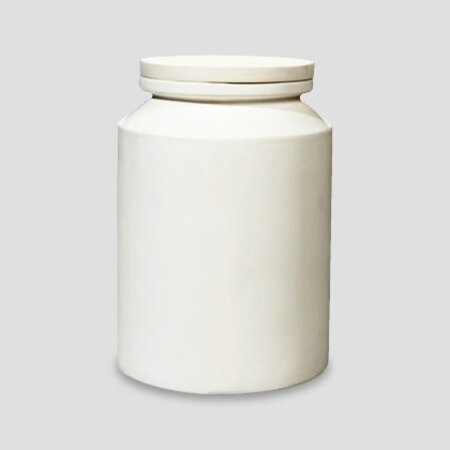
One short rule: slow and steady for brittle oxides. Faster speeds for magnetic alloys, but not too fast – you don’t want to embed media fragments.
We tested a batch of NiZn ferrite last quarter. Eight hours in a horizontal jar with zirconia beads. Particle size dropped from 40 microns down to 0.8 microns. Permeability improved by 12%. No iron pickup. That’s the kind of repeatability you need for inductors and transformers.
Don’t overthink the setup. Use the right jar size, fill it about half full with grinding media, add your powder, and run it horizontally. Check the powder every few hours. That’s it.
Below is a basic table of jar liners and what electronic materials they match. No fancy formatting – just the facts.
| Material Type | Example Compounds | Recommended Jar Liner | Key Concern |
|---|---|---|---|
| Oxide Ceramics | Alumina, Zirconia, BaTiO3 | Zirconia or Alumina | No silica contamination |
| Soft Ferrites | NiZn, MnZn ferrites | Nylon or Polyurethane | Zero metal ions allowed |
| Hard Ferrites / Magnets | SrFe12O19, BaFe12O19 | Stainless steel (lined) | High energy impact needed |
| Electrode Powders | Ag, Ag-Pd, Cu, Ni paste premix | PTFE or Tungsten carbide | Prevent metal embedding |
That table is from real product specs. Keep it simple. Match your liner to your material. Run horizontal. Test your particle size. You’ll get better yields in ceramic metallization and magnetic component fabrication every time.
