


You wouldn’t believe how many contamination headaches come from tiny little balls inside pumps, valves, and filling machines. In drug manufacturing, that’s a big deal. A single speck of metal wear or a chemical reaction from a regular ball bearing can ruin an entire batch of medicine. That’s expensive. And risky for patients.
So what’s the fix? Zirconia Ceramic Precision Balls.
These small but mighty components have changed the way we design equipment for sterile, high-purity environments. They don’t rust, they don’t leach anything into the product, and they last way longer than steel or even glass. For pharmaceutical applications, that means three critical things: purity, reliability, and less downtime.
Let me break this down for you.
In our tests, zirconia balls kept running smoothly for months in a high-pressure piston pump that delivered a sensitive insulin formulation. The stainless steel balls we used before started showing pitting after just two weeks. Why? Because the formulation had a slight buffer that corroded the metal surface. Zirconia? Nothing. No change in surface finish, no weight loss, no contamination.
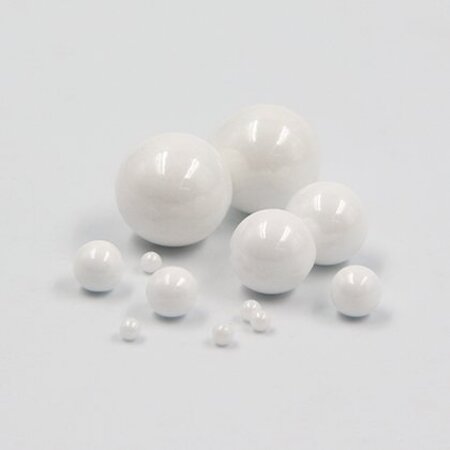
That chemical inertness is a lifesaver. Drug solutions often contain salts, preservatives, or pH modifiers. Many also use organic solvents or even aggressive cleaning agents like benzyl alcohol or sodium hydroxide during CIP (clean-in-place) cycles. Metal balls corrode under those conditions. Glass balls can chip or crack under mechanical shock. But zirconia精密陶瓷 balls stand their ground. They resist almost everything you throw at them — acids, caustics, hot water, steam, you name it.
Another hidden advantage is non-magnetic behavior. This matters more than you think. In tablet pressing or capsule filling, magnetic particles from metal wear can get trapped in the product. If you’re making a MRI contrast agent or any medicine that will be tested with magnetic sensors, even trace magnetic residue becomes a problem. Zirconia Ceramic Precision Balls have zero magnetic response. Clean and safe.
Then there’s the toughness story. People often assume ceramic equals fragile. Not true with zirconia. This material undergoes transformation toughening — it actually gets stronger locally when stressed. Think of it like this: if a small crack starts to form, the material around it expands slightly and clamps the crack shut. That’s why these balls survive in check valves that snap open and shut thousands of times a day. They don’t shatter. They don’t flatten. They just keep sealing perfectly.
Based on my experience, the single biggest reason pharma engineers finally switch to Zirconia Ceramic Precision Balls is lifetime cost. Yes, the upfront price is higher than steel. But when you add up the reduced batch rejections, less frequent pump rebuilds, no metal particle testing worries, and longer filter life (because no debris is generated), zirconia pays for itself fast. I’ve seen filling lines go from a valve rebuild every month to once every two years. That’s not an exaggeration.
So if you design or maintain equipment for sterile injectables, oral liquids, biotech processing, or even high-purity water loops for pharma, take a close look at these balls. They are small. But they solve very big problems.
